





Cork in construction

Cork is a product most commonly harvested from the outer bark of the cork oak (Quercus Suber), a thick soft spongy phellem, it also has an inner bark allowing it to survive when the outer bark is removed and regrow the outer bark cover over a number of years. After the first 25 years, bark regrowth of the tree takes around 9 years to regenerate making the cork material a rapidly renewable material, which also doesn't damage the tree from which it is harvested. The Cork Oak lives for about 150 - 200 years on average meaning that it will be harvested about 15 times over its lifecycle.
This ability for the tree to survive, regenerate and sequester carbon during growth along with the fact that the harvesting process does not damage or disturb the soils around the tree or the animal habitat of the tree makes it appealing as a sustainable material.
Cork has been harvested and used for over 5000 years from the Ancient Greeks to the Egyptians, Persians and Chinese, prized for its strength, water resistance and ability to float on water. It was used in sea faring vessels, small floatation devices for fishing, in the crafting of shoes, and in the manufacture of drink bottle stoppers, as well as in the construction buildings for insulation and flooring.
Today many of these use still continue to some extent, in terms of construction, cork is possibly most commonly associated with cork flooring, though it is also available as insulation blocks, sheets and also aggregate. Today the term cork may refer to other types of products than just natural cork, such as; expanded cork, agglomerated cork, cork polymers or reconstituted cork.
Expanded cork is made from cork granules which are bonded together usually using the same resins found in the cork itself. This allows larger sheets or blocks of cork to be created, than is usually possible with raw cork sheets from the tree. Agglomerated cork also uses cork granules but these are bonded together with a synthetic polyurethane bonding agent, the cork granules are usually classified in terms of density, to create different products such as flooring. Cork polymer are another way to describe agglomerated cork, sometimes with differing glued elements and reconstituted cork describes any of the above because it is formed from cork that has be ground into granules and reconstituted into another product.
[edit] Related articles on Designing Buildings
- Carbon sequestration.
- Construction innovation.
- Cork flooring.
- Innovate UK.
- Innovation in construction projects.
- Cork House.
- Insulation for ground floors.
- Polyurethane in construction.
- Resilient flooring.
- Sustainable home.
- Types of flooring.
- The five weirdest materials in construction.
- Types of rapidly renewable content.
- Whole-life costs for buildings WLC.
- Wood and the future home.
Featured articles
Check out some of the best features and news from Designing Buildings as well as key stories from around the web.

Why construction can't afford to ignore the skills gap.
Building Safety Regulator, 19 August

Gill Kernick appointed Independent Chair of Residents’ Panel.
Connecting knowledge, technology and conservation
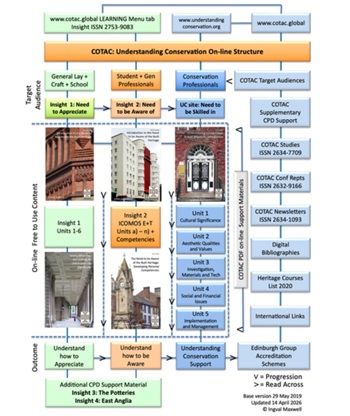
Building competence for the future of built heritage.
Building Regulations and Building Safety Act

CIOB publishes free advice for non-domestic clients.

Building Safety Newsletter from MHCLG.

An extraordinary record of steel engineering worldwide.

Households living near new pylons to save on bills.

ECA warns growth must not outpace grid capacity or skills.
The role of the client and decision making

CIOB response to built environment professions call for evidence.
Construction's sustainability reporting revolution
Tracking upfront embodied carbon with digital tools.
ECA welcomes procurement reforms

Public spending must back British jobs and skills.
Campaigning for Edinburgh: the Cockburn Association 1875-2049

The role of the civic voice in protecting character. Book review.